
共通テスト(英語) 過去問
令和5年度(2023年度)追・再試験
問81 (<旧課程>英語リスニング(第5問) 問6)
問題文
最初に講義を聞き問に答えなさい。状況、ワークシート、問い及び図表を読む時間が与えられた後、音声が流れます。
状況
あなたは大学で、美術館のデジタル化についての講義を、ワークシートにメモを取りながら聞いています。
Today, we’re going to focus on art in the digital age. With advances in technology, how people view art is changing. In recent years, some art collections have been put online to create“digital art museums.” Why are art museums moving to digital spaces?
One reason has to do with visitor access. In digital museums, visitors can experience art without the limitation of physical spaces. If museums are online, more people can make virtual visits to them. Also, as online museums never close, visitors can stay for as long as they like! Another reason is related to how collections are displayed. Online exhibits enable visitors to watch videos, see the artwork from various angles, and use interactive features. This gives visitors much more specific information about each collection.
Putting collections online takes extra effort, time, and money. First, museum directors must be eager to try this new format. Then, they have to take the time to hire specialists and raise the money to buy the necessary technology. Of course, many people might still want to see the actual pieces themselves. These factors are some reasons why not all museums are adding an online format.
Many art museums have been offering digital versions of their museums for free, but this system might change in the future. Museums will probably need to depend on income from a hybrid style of both in−person and online visitors. This kind of income could enable them to remain financially sustainable for future generations. Now, let’s do our presentations. Group 1, start when you are ready.
講義の内容と一致するものはどれか。最も適切なものを、四つの選択肢のうちから一つ選びなさい。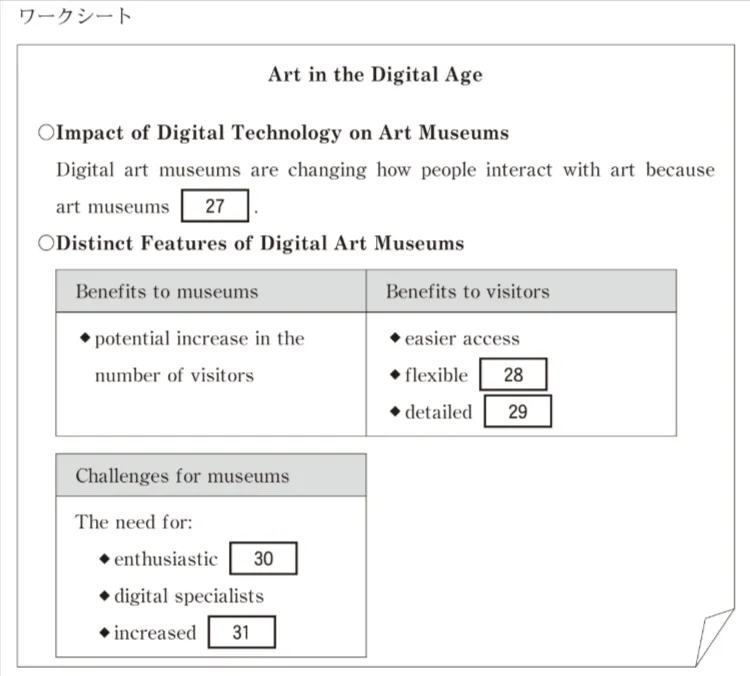
状況
あなたは大学で、美術館のデジタル化についての講義を、ワークシートにメモを取りながら聞いています。
Today, we’re going to focus on art in the digital age. With advances in technology, how people view art is changing. In recent years, some art collections have been put online to create“digital art museums.” Why are art museums moving to digital spaces?
One reason has to do with visitor access. In digital museums, visitors can experience art without the limitation of physical spaces. If museums are online, more people can make virtual visits to them. Also, as online museums never close, visitors can stay for as long as they like! Another reason is related to how collections are displayed. Online exhibits enable visitors to watch videos, see the artwork from various angles, and use interactive features. This gives visitors much more specific information about each collection.
Putting collections online takes extra effort, time, and money. First, museum directors must be eager to try this new format. Then, they have to take the time to hire specialists and raise the money to buy the necessary technology. Of course, many people might still want to see the actual pieces themselves. These factors are some reasons why not all museums are adding an online format.
Many art museums have been offering digital versions of their museums for free, but this system might change in the future. Museums will probably need to depend on income from a hybrid style of both in−person and online visitors. This kind of income could enable them to remain financially sustainable for future generations. Now, let’s do our presentations. Group 1, start when you are ready.
講義の内容と一致するものはどれか。最も適切なものを、四つの選択肢のうちから一つ選びなさい。
このページは閲覧用ページです。
履歴を残すには、 「新しく出題する(ここをクリック)」 をご利用ください。
問題
共通テスト(英語)試験 令和5年度(2023年度)追・再試験 問81(<旧課程>英語リスニング(第5問) 問6) (訂正依頼・報告はこちら)
最初に講義を聞き問に答えなさい。状況、ワークシート、問い及び図表を読む時間が与えられた後、音声が流れます。
状況
あなたは大学で、美術館のデジタル化についての講義を、ワークシートにメモを取りながら聞いています。
Today, we’re going to focus on art in the digital age. With advances in technology, how people view art is changing. In recent years, some art collections have been put online to create“digital art museums.” Why are art museums moving to digital spaces?
One reason has to do with visitor access. In digital museums, visitors can experience art without the limitation of physical spaces. If museums are online, more people can make virtual visits to them. Also, as online museums never close, visitors can stay for as long as they like! Another reason is related to how collections are displayed. Online exhibits enable visitors to watch videos, see the artwork from various angles, and use interactive features. This gives visitors much more specific information about each collection.
Putting collections online takes extra effort, time, and money. First, museum directors must be eager to try this new format. Then, they have to take the time to hire specialists and raise the money to buy the necessary technology. Of course, many people might still want to see the actual pieces themselves. These factors are some reasons why not all museums are adding an online format.
Many art museums have been offering digital versions of their museums for free, but this system might change in the future. Museums will probably need to depend on income from a hybrid style of both in−person and online visitors. This kind of income could enable them to remain financially sustainable for future generations. Now, let’s do our presentations. Group 1, start when you are ready.
講義の内容と一致するものはどれか。最も適切なものを、四つの選択肢のうちから一つ選びなさい。
状況
あなたは大学で、美術館のデジタル化についての講義を、ワークシートにメモを取りながら聞いています。
Today, we’re going to focus on art in the digital age. With advances in technology, how people view art is changing. In recent years, some art collections have been put online to create“digital art museums.” Why are art museums moving to digital spaces?
One reason has to do with visitor access. In digital museums, visitors can experience art without the limitation of physical spaces. If museums are online, more people can make virtual visits to them. Also, as online museums never close, visitors can stay for as long as they like! Another reason is related to how collections are displayed. Online exhibits enable visitors to watch videos, see the artwork from various angles, and use interactive features. This gives visitors much more specific information about each collection.
Putting collections online takes extra effort, time, and money. First, museum directors must be eager to try this new format. Then, they have to take the time to hire specialists and raise the money to buy the necessary technology. Of course, many people might still want to see the actual pieces themselves. These factors are some reasons why not all museums are adding an online format.
Many art museums have been offering digital versions of their museums for free, but this system might change in the future. Museums will probably need to depend on income from a hybrid style of both in−person and online visitors. This kind of income could enable them to remain financially sustainable for future generations. Now, let’s do our presentations. Group 1, start when you are ready.
講義の内容と一致するものはどれか。最も適切なものを、四つの選択肢のうちから一つ選びなさい。
- More art museums are planning to offer free services on site for visitors with seasonal passes.
- Museums may need to maintain both traditional and online spaces to be successful in the future.
- One objective for art museums is to get younger generations interested in seeing exhibits in person.
- The production of sustainable art pieces will provide the motivation for expanding digital art museums.
正解!素晴らしいです
残念...
画像拡大
この過去問の解説 (3件)
01
講義の内容と一致するものを選ぶには、全体の内容と照らし合わせるしかありません。
一つずつ見ていきます。
「より多くのアートミュージアムが、年間パスポートを持つ訪問者に無料のサービスを提供することを計画している。」
Many art museums have been offering digital versions of their museums for free, but this system might change in the future.
(多くのアートミュージアムが、無料でデジタルバージョンを提供してきたが、このシステムは将来変わるかもしれない。)
とあり、誤りです。
正解 「ミュージアムは、将来成功するために、伝統的なものとオンラインのものの両方を維持していく必要があるかもしれない。」
Museums will probably need to depend on income from a hybrid style of both in−person and online visitors.
(ミュージアムは、おそらく、対面とオンラインの両方の融合型からの収入に頼る必要が出てくるだろう。)
とあり、内容と一致します。
「アートミュージアムの一つの目的は、対面で展示を見るのに興味を持つ若い世代を作ることだ。」
若い世代についての記載はありません。
「持続可能なアートを生み出すことは、デジタルアートミュージアムを拡大するモチベーションを与えてくれるだろう。」
This kind of income could enable them to remain financially sustainable for future generations.
(この種の収入は、将来の世代のために、財政的に持続できるのを可能にするだろう。)
とありますが、これは財政面の話であり、ミュージアム拡大の論とは無関係です。
参考になった数0
この解説の修正を提案する
02
この問題では、デジタル美術館のメリットデメリットを理解した上で、文章が何を言いたいのか予測する必要があります。それでは、問題を見てみましょう。
不正解です。
“Many art museums have been offering digital versions of their museums for free, but this system might change in the future.”
とあるように、選択肢の内容は行われてきたが、将来的に変わる可能性があると述べられています。
正解です。
“Museums will probably need to depend on income from a hybrid style of both in−person and online visitors.”
対面とデジタル両方の収入が必要だ、という文章は、選択肢の内容に沿っていると言えます。
不正解です。若い世代についての記載はありません。
不正解です。この文章は、デジタル美術館のメリットデメリットについて書かれていて、その拡張(expansion)については記載はありません。
参考になった数0
この解説の修正を提案する
03
選択肢の文を精読する時間は限られていると思いますが、選択肢を読む時間の間には可能な限りキーワードだけでも拾っておくことで、正答率が上がるはずです。
「サイト上で来場者たちにシーズンパスで無料サービスを提供しようとしている美術館が増えている。」
最終段落第6文Many art museums have been offering digital versions of their museums for free, but this system might change in the future.より、「多くの美術館が無料サービスを提供しているが変わる必要がある。」ということが読み取れます。
シーズンパスへの言及はなく、また展望としてはその状況を変えるべきと読み取れますので、誤答です。
「博物館が今後成功するためには、伝統的・オンライン両方の場所を維持していく必要があるのかもしれない。」
最終段落第7文Museums will probably need to depend on income from a hybrid style of both in−person and online visitors.より、「博物館は対面式とオンラインの来場者両方の融合したスタイルでの収入に依拠していく必要がある」とわかります。
文意がほぼ同じと捉えられますので、正答です。
「美術館の一つの目標は、対面で展示を見に来ることに若い世代に関心を持ってもらうということだ。」
若い世代への言及はありませんでした。誤答です。
「持続可能な芸術作品の制作はデジタル美術館の拡大動機を生み出す。」
講義を通して、「デジタル美術館が美術館にもたらす影響」が述べられていました。「デジタル美術館を拡大するために何をするか」ということについて言及はありませんでした。誤答です。
参考になった数0
この解説の修正を提案する
前の問題(問79)へ
令和5年度(2023年度)追・再試験 問題一覧
次の問題(問82)へ