
共通テスト(英語) 過去問
令和7年度(2025年度)追・再試験
問4 (英語リーディング(第2問) 問1)
問題文
各大問の英文や図表を読み、解答にあてはまるものとして最も適当な選択肢を選びなさい。
You are writing a report about the attitudes of married couples towards housework. In order to prepare, you find this online article written by a British exchange student living in Japan.
Who does what at home?
12 November 2024
Stephen Nitwick
Tokomachi, Japan
I’ve been doing a homestay with a Japanese family in Tokomachi City and I’ve noticed a few differences in the roles of the members between my two families. For example, my father back in England makes breakfast but my host father takes out the rubbish. A few weeks ago, however, my host father also started cooking for us after work. His food has become really good with help from an online cooking site. This made me wonder how housework was being shared in other Japanese families in my city.
I found an online survey of 5,000 Tokomachi residents who are married and have children: Half are husbands and the other half are wives. Of all the respondents, 80% said that wives, in general, do the majority of both the household chores and child raising. Also, 70% of the wives who were surveyed wished their husbands would do more around the house. Furthermore, 60% of the husbands said that they want more responsibility around the home.
The survey asked the couples about how they could be better partners in housework. The answer among the majority of husbands was shorter working hours for themselves. The answer most favoured by wives was a change in their husbands’ awareness of household chores and childcare duties. I find it interesting that husbands and wives perceive the solution to being a better partner from different angles.
Although the current situation is not really satisfactory for many respondents in the survey, I think it’s still encouraging that many couples want to improve how the housework and childcare tasks are shared. The future looks promising.
Which option best describes Stephen’s opinion?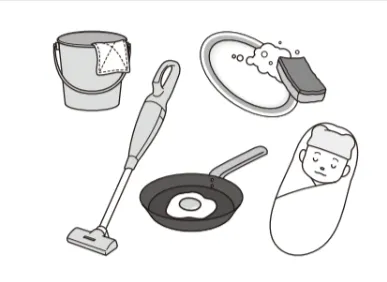
You are writing a report about the attitudes of married couples towards housework. In order to prepare, you find this online article written by a British exchange student living in Japan.
Who does what at home?
12 November 2024
Stephen Nitwick
Tokomachi, Japan
I’ve been doing a homestay with a Japanese family in Tokomachi City and I’ve noticed a few differences in the roles of the members between my two families. For example, my father back in England makes breakfast but my host father takes out the rubbish. A few weeks ago, however, my host father also started cooking for us after work. His food has become really good with help from an online cooking site. This made me wonder how housework was being shared in other Japanese families in my city.
I found an online survey of 5,000 Tokomachi residents who are married and have children: Half are husbands and the other half are wives. Of all the respondents, 80% said that wives, in general, do the majority of both the household chores and child raising. Also, 70% of the wives who were surveyed wished their husbands would do more around the house. Furthermore, 60% of the husbands said that they want more responsibility around the home.
The survey asked the couples about how they could be better partners in housework. The answer among the majority of husbands was shorter working hours for themselves. The answer most favoured by wives was a change in their husbands’ awareness of household chores and childcare duties. I find it interesting that husbands and wives perceive the solution to being a better partner from different angles.
Although the current situation is not really satisfactory for many respondents in the survey, I think it’s still encouraging that many couples want to improve how the housework and childcare tasks are shared. The future looks promising.
Which option best describes Stephen’s opinion?
このページは閲覧用ページです。
履歴を残すには、 「新しく出題する(ここをクリック)」 をご利用ください。
問題
共通テスト(英語)試験 令和7年度(2025年度)追・再試験 問4(英語リーディング(第2問) 問1) (訂正依頼・報告はこちら)
各大問の英文や図表を読み、解答にあてはまるものとして最も適当な選択肢を選びなさい。
You are writing a report about the attitudes of married couples towards housework. In order to prepare, you find this online article written by a British exchange student living in Japan.
Who does what at home?
12 November 2024
Stephen Nitwick
Tokomachi, Japan
I’ve been doing a homestay with a Japanese family in Tokomachi City and I’ve noticed a few differences in the roles of the members between my two families. For example, my father back in England makes breakfast but my host father takes out the rubbish. A few weeks ago, however, my host father also started cooking for us after work. His food has become really good with help from an online cooking site. This made me wonder how housework was being shared in other Japanese families in my city.
I found an online survey of 5,000 Tokomachi residents who are married and have children: Half are husbands and the other half are wives. Of all the respondents, 80% said that wives, in general, do the majority of both the household chores and child raising. Also, 70% of the wives who were surveyed wished their husbands would do more around the house. Furthermore, 60% of the husbands said that they want more responsibility around the home.
The survey asked the couples about how they could be better partners in housework. The answer among the majority of husbands was shorter working hours for themselves. The answer most favoured by wives was a change in their husbands’ awareness of household chores and childcare duties. I find it interesting that husbands and wives perceive the solution to being a better partner from different angles.
Although the current situation is not really satisfactory for many respondents in the survey, I think it’s still encouraging that many couples want to improve how the housework and childcare tasks are shared. The future looks promising.
Which option best describes Stephen’s opinion?
You are writing a report about the attitudes of married couples towards housework. In order to prepare, you find this online article written by a British exchange student living in Japan.
Who does what at home?
12 November 2024
Stephen Nitwick
Tokomachi, Japan
I’ve been doing a homestay with a Japanese family in Tokomachi City and I’ve noticed a few differences in the roles of the members between my two families. For example, my father back in England makes breakfast but my host father takes out the rubbish. A few weeks ago, however, my host father also started cooking for us after work. His food has become really good with help from an online cooking site. This made me wonder how housework was being shared in other Japanese families in my city.
I found an online survey of 5,000 Tokomachi residents who are married and have children: Half are husbands and the other half are wives. Of all the respondents, 80% said that wives, in general, do the majority of both the household chores and child raising. Also, 70% of the wives who were surveyed wished their husbands would do more around the house. Furthermore, 60% of the husbands said that they want more responsibility around the home.
The survey asked the couples about how they could be better partners in housework. The answer among the majority of husbands was shorter working hours for themselves. The answer most favoured by wives was a change in their husbands’ awareness of household chores and childcare duties. I find it interesting that husbands and wives perceive the solution to being a better partner from different angles.
Although the current situation is not really satisfactory for many respondents in the survey, I think it’s still encouraging that many couples want to improve how the housework and childcare tasks are shared. The future looks promising.
Which option best describes Stephen’s opinion?
- Stephen’s father makes breakfast every day.
- Stephen’s father should learn cooking online.
- Stephen’s host father has his own online cooking site.
- Stephen’s host father’s cooking has got tasty.
正解!素晴らしいです
残念...
画像拡大
この過去問の解説 (3件)
01
正しい選択肢は、「Stephen’s host father’s cooking has got tasty.」です。
この問題では、Stephenが本文で述べている内容に合うものを選びます。本文では、Stephenのホストファザーが数週間前から仕事のあとに料理を始め、オンライン料理サイトの助けで、料理がとても上手になったと書かれています。
これは適切ではありません。
本文では、Stephenのイギリスの父が朝食を作ると書かれています。
しかし、every day、つまり「毎日」とは書かれていません。そのため、本文よりも言いすぎています。
これは適切ではありません。
本文では、オンライン料理サイトを使って料理が上手になったのは、Stephenの父ではなくホストファザーです。
また、Stephenの父がオンラインで料理を学ぶべきだ、という意見も書かれていません。
これは適切ではありません。
本文では、ホストファザーがオンライン料理サイトの助けを借りたと書かれています。
しかし、ホストファザーが自分の料理サイトを持っているとは書かれていません。
これは正しいです。
本文には、「His food has become really good」とあります。
これは「彼の料理は本当においしくなった」という意味です。ここでの「His」は、直前に出てくるホストファザーを指しています。
そのため、ホストファザーの料理が上手になり、おいしくなったというこの選択肢は本文の内容と合っています。
この問題では、本文中の「my father」と「my host father」を区別することが大切です。
Stephenのイギリスの父は朝食を作ります。一方、Stephenのホストファザーは、最近料理を始め、オンライン料理サイトを参考にして、料理がとても上手になりました。
したがって、本文の内容に最も合うのは「Stephen’s host father’s cooking has got tasty.」です。
参考になった数0
この解説の修正を提案する
02
設問:次のうちStephen(筆者)の意見を最もよく表している選択肢はどれですか?
問題のポイント
事実と意見や感想を区別しましょう。
訳)
あなたは夫婦の家事に対する考え方についてレポートを書いています。準備のため、日本に住むイギリス人留学生が書いたオンライン記事を見つけました。
家ではだれが何をしているのか?
2024年11月12日
Stephen Nitwick
日本 トコマチ市
私はトコマチ市で日本人家庭にホームステイをしており、自分の家族とホストファミリーとの間で、家族それぞれの役割にいくつか違いがあることに気付きました。例えば、イギリスにいる私の父は朝食を作りますが、ホストファミリーのお父さんはゴミ出しをしています。しかし数週間前から、ホストファミリーんぼお父さんも仕事の後に私たちのために料理をするようになりました。オンラインの料理サイトの助けを借りて、彼の料理はとても上達しました。このことがきっかで、私の住む町の他の日本人家庭では家事がどのように分担されているのか気になるようになりました。
・role(名詞):役割
・take out the rubbish:ごみを捨てる
私は、結婚していても子供がいるトコマチ市市民5,000人を対象にしたオンライン調査を見つけました。半数が夫で、残り半分が妻です。回答者全体の80%は、一般的に女性が家事と子育ての大部分を担っていると答えました。また、調査対象となった女性の70%は、夫にもっと家事をしてほしいと思っていました。さらに、夫の60%は家庭内でより多くの責任を担っていたいと答えました。
・wives:wifeの複数形
・majority(名詞):大部分
・household chore:家事
その調査では、家事においてより良いパートナーになるためにはどうすれば良いかを夫婦に尋ねました。夫の多数派の回答は、「自分たちの労働時間が短くなること」でした。一方、女性たちが最も支持した答えは、「夫の家事や育児に対する意識の変化」でした。私は夫と妻が「より良いパートナーになるための解決策」を異なる視点から捉えていることを興味深く感じます。
・awareness(名詞):意識
現在の状況は、多くの回答者にとってあまり満足のいくものではありませんが、それでも、多くの夫婦が家事や育児の分担を改善したいと考えていることは心強いと思います。将来は明るいように思います。
・satisfactory(形容詞):満足できる、良好
・promising(形容詞):有望な
不正解
訳)Stephenの父親は毎日朝食を作る。
「毎日」とは記述がないため不正解です。
不正解
訳)Stephenの父親はオンラインで料理を学ぶべきだ。
「学ぶべきだ」という意見を述べていないため不正解です。
不正解
訳)Stephenのホストファミリーのお父さんは自分の料理サイトを持っている。
これは「料理サイトを利用した」という意味です。サイトを運営しているわけではないため不正解です。
正解
訳)Stephenのホストファミリーのお父さんの料理はおいしくなった。
根拠となる文は1段落目の、His food has become really good with help from an online cooking site(オンラインの料理サイトの助けを借りて、彼の料理はとても上達しました。).です。
この選択肢は本文をほぼそのまま言い換えているため正解です。
参考になった数0
この解説の修正を提案する
03
問題文は
「どの選択肢がステファンの意見を表しているか。」
です。
すべて、「father」に関する記述のため、該当箇所を特定していきます。
my father back in England makes breakfast but my host father takes out the rubbish. A few weeks ago, however, my host father also started cooking for us after work. His food has become really good with help from an online cooking site.
(イギリスの父は朝食を作りますが、私のホストファザーはゴミを出します。しかし数週間前、ホストファザーは仕事の後に私たちにご飯を作り始めました。彼の食事は、オンラインのクッキングサイトの助けでとてもおいしくなりました。)
とあります。
この内容に該当するものを選びます。
「ステファンの父親は毎日朝食を作る。」
「朝食を作る」とはありますが、毎日かどうか、記述されていないため、誤りです。
「ステファンの父親はオンラインで料理を学ぶべきだ。」
内容と一致しません。
「ステファンのポストファザーは、自分の料理サイトを持っている。」
内容と一致しません。
正解「ステファンのホストファザーの料理は美味しくなった。」
my host father also started cooking for us after work. His food has become really good with help from an online cooking site.
(ホストファザーは仕事の後に私たちにご飯を作り始めました。彼の食事は、オンラインのクッキングサイトの助けでとてもおいしくなりました。)
とあり、正解です。
参考になった数0
この解説の修正を提案する
前の問題(問3)へ
令和7年度(2025年度)追・再試験 問題一覧
次の問題(問5)へ