
共通テスト(英語) 過去問
令和7年度(2025年度)追・再試験
問77 (英語リスニング(第5問) 問7)
問題文
最初に講義を聞き、問いに答えなさい。
<状況>
あなたは、大学で都市計画に関する科目を履修していて、一連の活動(活動1,2,3)に取り組んでいます。
<活動1>
あなたは、ワークシートにメモを取りながら、講義を聞いています。
In our last class, we looked at how climate change is presenting challenges for cities across the globe. Today we will focus on what city planners are doing to deal with extreme heat in cities. To reduce temperatures, urban designers are adding “passive cooling” elements. This means designing and redeveloping greenery, streets, and buildings in specific ways to reduce heat in the city.
Greenery, or “green coverage,” includes parks, gardens, trees, and other types of vegetation that provide shade. A study conducted in Melbourne, Australia, suggests a 10 percent increase in green coverage could reduce daytime temperatures by 1 degree Celsius. Other advantages are better psychological health for residents and a richer variety of wildlife.
The layout of streets can play an important role in passive cooling. By placing streets in line with local wind patterns, air can flow easily through a city, lowering the temperature. One study shows that tropical cities like Singapore could benefit from having streets arranged so that ocean winds move through them, cooling the city off. Additionally, good wind flow decreases air pollution, improving residents’ health.
Building design can also affect city temperatures. Many studies recommend the use of buildings of various heights. High−rise buildings create shade and low−rise buildings allow wind to blow hot air away. In tropical cities near the ocean, like Manila in the Philippines, low−rise buildings should be built near the shore so breezes reach the inside of the city. As an added benefit, buildings of various sizes make the city visually attractive.
These are some ways that good use of urban design can help cool our cities and make them better places to live.
<活動2>
あなたは、講義の要約を書く準備をしています。グループのメンバー A,Bと内容を口頭で確認しています。
StudentA:
Although passive cooling can lower temperatures in tropical cities, it can also have negative effects on health.
StudentB:
Cities can be planned or redesigned in various ways to reduce heat levels.
<活動3>
あなたは、Joe と May との三人で、後の図表を見ながら、講義の内容についてディスカッションの準備をしています。
Joe と May の会話の内容及び講義の内容からどのようなことが言えるか、最も適切なものを、四つの選択肢のうちから一つ選びなさい。余白を使ってメモを取ってもかまいません。
May: This graph from a city planning report shows how effective different amounts of green coverage are at cooling urban spaces. Lower scores mean lower temperatures.
Joe: Really? I thought more greenery would always mean cooler temperatures. I guess not.
May: Exactly. The report says the shadows of tall buildings could cool cities better than the shade of trees in the morning and late afternoon.
Joe: Yeah. Trees mostly create shade around noon, when the sun is directly overhead.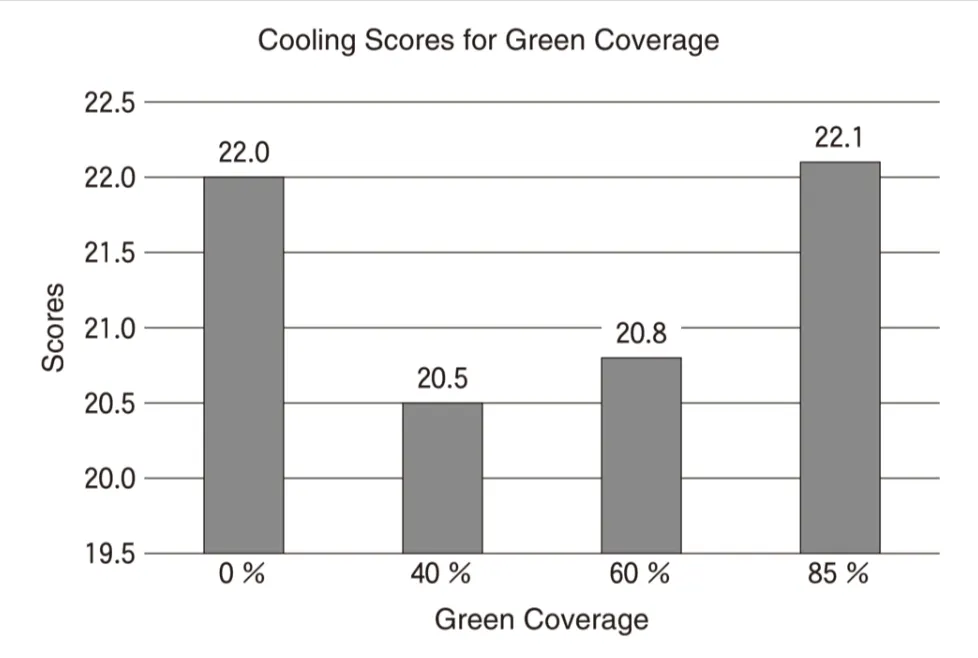
<状況>
あなたは、大学で都市計画に関する科目を履修していて、一連の活動(活動1,2,3)に取り組んでいます。
<活動1>
あなたは、ワークシートにメモを取りながら、講義を聞いています。
In our last class, we looked at how climate change is presenting challenges for cities across the globe. Today we will focus on what city planners are doing to deal with extreme heat in cities. To reduce temperatures, urban designers are adding “passive cooling” elements. This means designing and redeveloping greenery, streets, and buildings in specific ways to reduce heat in the city.
Greenery, or “green coverage,” includes parks, gardens, trees, and other types of vegetation that provide shade. A study conducted in Melbourne, Australia, suggests a 10 percent increase in green coverage could reduce daytime temperatures by 1 degree Celsius. Other advantages are better psychological health for residents and a richer variety of wildlife.
The layout of streets can play an important role in passive cooling. By placing streets in line with local wind patterns, air can flow easily through a city, lowering the temperature. One study shows that tropical cities like Singapore could benefit from having streets arranged so that ocean winds move through them, cooling the city off. Additionally, good wind flow decreases air pollution, improving residents’ health.
Building design can also affect city temperatures. Many studies recommend the use of buildings of various heights. High−rise buildings create shade and low−rise buildings allow wind to blow hot air away. In tropical cities near the ocean, like Manila in the Philippines, low−rise buildings should be built near the shore so breezes reach the inside of the city. As an added benefit, buildings of various sizes make the city visually attractive.
These are some ways that good use of urban design can help cool our cities and make them better places to live.
<活動2>
あなたは、講義の要約を書く準備をしています。グループのメンバー A,Bと内容を口頭で確認しています。
StudentA:
Although passive cooling can lower temperatures in tropical cities, it can also have negative effects on health.
StudentB:
Cities can be planned or redesigned in various ways to reduce heat levels.
<活動3>
あなたは、Joe と May との三人で、後の図表を見ながら、講義の内容についてディスカッションの準備をしています。
Joe と May の会話の内容及び講義の内容からどのようなことが言えるか、最も適切なものを、四つの選択肢のうちから一つ選びなさい。余白を使ってメモを取ってもかまいません。
May: This graph from a city planning report shows how effective different amounts of green coverage are at cooling urban spaces. Lower scores mean lower temperatures.
Joe: Really? I thought more greenery would always mean cooler temperatures. I guess not.
May: Exactly. The report says the shadows of tall buildings could cool cities better than the shade of trees in the morning and late afternoon.
Joe: Yeah. Trees mostly create shade around noon, when the sun is directly overhead.
このページは閲覧用ページです。
履歴を残すには、 「新しく出題する(ここをクリック)」 をご利用ください。
問題
反映中…
共通テスト(英語)試験 令和7年度(2025年度)追・再試験 問77(英語リスニング(第5問) 問7) (訂正依頼・報告はこちら)
最初に講義を聞き、問いに答えなさい。
<状況>
あなたは、大学で都市計画に関する科目を履修していて、一連の活動(活動1,2,3)に取り組んでいます。
<活動1>
あなたは、ワークシートにメモを取りながら、講義を聞いています。
In our last class, we looked at how climate change is presenting challenges for cities across the globe. Today we will focus on what city planners are doing to deal with extreme heat in cities. To reduce temperatures, urban designers are adding “passive cooling” elements. This means designing and redeveloping greenery, streets, and buildings in specific ways to reduce heat in the city.
Greenery, or “green coverage,” includes parks, gardens, trees, and other types of vegetation that provide shade. A study conducted in Melbourne, Australia, suggests a 10 percent increase in green coverage could reduce daytime temperatures by 1 degree Celsius. Other advantages are better psychological health for residents and a richer variety of wildlife.
The layout of streets can play an important role in passive cooling. By placing streets in line with local wind patterns, air can flow easily through a city, lowering the temperature. One study shows that tropical cities like Singapore could benefit from having streets arranged so that ocean winds move through them, cooling the city off. Additionally, good wind flow decreases air pollution, improving residents’ health.
Building design can also affect city temperatures. Many studies recommend the use of buildings of various heights. High−rise buildings create shade and low−rise buildings allow wind to blow hot air away. In tropical cities near the ocean, like Manila in the Philippines, low−rise buildings should be built near the shore so breezes reach the inside of the city. As an added benefit, buildings of various sizes make the city visually attractive.
These are some ways that good use of urban design can help cool our cities and make them better places to live.
<活動2>
あなたは、講義の要約を書く準備をしています。グループのメンバー A,Bと内容を口頭で確認しています。
StudentA:
Although passive cooling can lower temperatures in tropical cities, it can also have negative effects on health.
StudentB:
Cities can be planned or redesigned in various ways to reduce heat levels.
<活動3>
あなたは、Joe と May との三人で、後の図表を見ながら、講義の内容についてディスカッションの準備をしています。
Joe と May の会話の内容及び講義の内容からどのようなことが言えるか、最も適切なものを、四つの選択肢のうちから一つ選びなさい。余白を使ってメモを取ってもかまいません。
May: This graph from a city planning report shows how effective different amounts of green coverage are at cooling urban spaces. Lower scores mean lower temperatures.
Joe: Really? I thought more greenery would always mean cooler temperatures. I guess not.
May: Exactly. The report says the shadows of tall buildings could cool cities better than the shade of trees in the morning and late afternoon.
Joe: Yeah. Trees mostly create shade around noon, when the sun is directly overhead.
<状況>
あなたは、大学で都市計画に関する科目を履修していて、一連の活動(活動1,2,3)に取り組んでいます。
<活動1>
あなたは、ワークシートにメモを取りながら、講義を聞いています。
In our last class, we looked at how climate change is presenting challenges for cities across the globe. Today we will focus on what city planners are doing to deal with extreme heat in cities. To reduce temperatures, urban designers are adding “passive cooling” elements. This means designing and redeveloping greenery, streets, and buildings in specific ways to reduce heat in the city.
Greenery, or “green coverage,” includes parks, gardens, trees, and other types of vegetation that provide shade. A study conducted in Melbourne, Australia, suggests a 10 percent increase in green coverage could reduce daytime temperatures by 1 degree Celsius. Other advantages are better psychological health for residents and a richer variety of wildlife.
The layout of streets can play an important role in passive cooling. By placing streets in line with local wind patterns, air can flow easily through a city, lowering the temperature. One study shows that tropical cities like Singapore could benefit from having streets arranged so that ocean winds move through them, cooling the city off. Additionally, good wind flow decreases air pollution, improving residents’ health.
Building design can also affect city temperatures. Many studies recommend the use of buildings of various heights. High−rise buildings create shade and low−rise buildings allow wind to blow hot air away. In tropical cities near the ocean, like Manila in the Philippines, low−rise buildings should be built near the shore so breezes reach the inside of the city. As an added benefit, buildings of various sizes make the city visually attractive.
These are some ways that good use of urban design can help cool our cities and make them better places to live.
<活動2>
あなたは、講義の要約を書く準備をしています。グループのメンバー A,Bと内容を口頭で確認しています。
StudentA:
Although passive cooling can lower temperatures in tropical cities, it can also have negative effects on health.
StudentB:
Cities can be planned or redesigned in various ways to reduce heat levels.
<活動3>
あなたは、Joe と May との三人で、後の図表を見ながら、講義の内容についてディスカッションの準備をしています。
Joe と May の会話の内容及び講義の内容からどのようなことが言えるか、最も適切なものを、四つの選択肢のうちから一つ選びなさい。余白を使ってメモを取ってもかまいません。
May: This graph from a city planning report shows how effective different amounts of green coverage are at cooling urban spaces. Lower scores mean lower temperatures.
Joe: Really? I thought more greenery would always mean cooler temperatures. I guess not.
May: Exactly. The report says the shadows of tall buildings could cool cities better than the shade of trees in the morning and late afternoon.
Joe: Yeah. Trees mostly create shade around noon, when the sun is directly overhead.
- In urban areas, 40% green coverage is best because this allows more room for well−organized streets.
- Low−rise buildings can cool cities and, at certain times of day, high−rise buildings can cool better than green coverage.
- Tall buildings are ineffective for cooling cities, but even a small increase in green coverage can reduce temperatures.
- The score of 22.1 is the best on the chart because increased green coverage lowers city temperatures.
正解!素晴らしいです
残念...
画像拡大
この過去問の解説 (3件)
01
リスニングの問題である事を踏まえて解答を作成していきます。
少し長めの英文と会話を聴いて4つの文章の正誤の判定をします。
会話の中で特に重要な箇所は次の通りです。
"Lower scores mean lower temperatures."(グラフの説明)
"the shadows of tall buildings could cool cities better than the shade of trees in the morning and late afternoon."
意味的に、tall buildings ≒ high−rise buildings と解釈できます。
mean:意味する
shadow:一般的な影
shade:特に日陰など
グラフも見る必要があります。
"green coverage" が適度であれば気温を下げるのに有効で、
逆に多すぎると逆効果になっている事を読み取れます。
さらに、正答を得るには長文の説明の中でも思い出すべき箇所があります。
"low−rise buildings allow wind to blow hot air away."
allow ~ to …:①~が…する事を可能にする ②~が…する事を許可する
これらから正答は、
"Low−rise buildings can cool cities and, at certain times of day, high−rise buildings can cool better than green coverage." となります。
前半は長文の説明から正しく、後半は会話文とグラフから正しい事になります。
"In urban areas, 40% green coverage is best because this allows more room for well−organized streets."
because 以下が正しくありません。その事は長文の説明にも会話にもなく、グラフからも読み取れません。
この選択肢は不適切です。
"Low−rise buildings can cool cities and,
at certain times of day, high−rise buildings can cool better than green coverage."
certain:①ある(明言を避けたうえで「特定の」) ②確かである
前半部分:長文の説明の "low−rise buildings allow wind to blow hot air away." に合致します。
会話にはない部分なので注意が必要であり、何とか思い出したいところです。
後半部分:会話部分の "the shadows of tall buildings could cool cities better than the shade of trees in the morning and late afternoon." に合致します。
よって、この選択肢が正答となります。
"Tall buildings are ineffective for cooling cities, but even a small increase in green coverage can reduce temperatures."
前半の "ineffective(効果的でない)" が長文の説明にも会話にも反します。
後半部分も、会話やグラフとかみ合わない内容になっています。(green coverage が多すぎると逆効果になる事がグラフから分かり、会話でも言及されているためです。)
この選択肢は不適切です。
"The score of 22.1 is the best on the chart because increased green coverage lowers city temperatures. "
"best" の部分が誤っています。
会話のグラフの説明は "Lower scores mean lower temperatures." となっており、22.1 というスコアは最も悪いものと言えます。
そのためこの選択肢は不適切です。
知っておきたい語句は、
mean, shadow, shade, allow ~ to … , certain などです。
本設問に限って言えば語彙力よりも、短時間で比較的多い情報をまとめる能力が重要になってきます。
単独のリスニングの設問として見ると、やや難しい部類に入るかと思われます。
しかしグラフの意味を素早く判断し、落ち着いて長文の説明の内容を思い出せば正答を選ぶ事は充分可能です。
また、前の設問の「ワークシート」で長文の考察をある程度しているため、比較的内容を思い出しやすいかもしれません。
参考になった数0
この解説の修正を提案する
02
この問題では、講義の内容と、JoeとMayの会話の内容を合わせて判断します。講義では、低い建物は風を通して熱い空気を外へ逃がすと説明されています。また、会話では、朝と夕方ごろには、高い建物の影が木の影より都市を冷やすことがあると述べられています。
これは適切ではありません。
この選択肢は、「都市部では、40%の緑地が最もよい。なぜなら、整った道路のための空間を多く残せるからだ」という意味です。
しかし、会話や講義では、40%の緑地が最もよいとは述べられていません。また、「道路のための空間を残せるから」という理由も出てきません。
これは正しいです。
講義では、「low−rise buildings allow wind to blow hot air away」と説明されています。これは、「低い建物は、風が熱い空気を外へ運ぶのを助ける」という意味です。
そのため、低い建物には都市を冷やす働きがあります。
また、Mayは「朝と夕方ごろには、高い建物の影が木の影より都市を冷やすことがある」と説明しています。つまり、時間帯によっては、高い建物の影のほうが緑地より冷却効果が高いことがあります。
これは適切ではありません。
この選択肢は、「高い建物は都市を冷やすのに効果がない」と言っています。
しかし、会話では、高い建物の影が朝や夕方に都市を冷やすことがあると説明されています。そのため、高い建物が冷却に効果がないという部分が本文と合いません。
また、講義では緑地を10%増やすと日中の気温を1℃下げる可能性があると説明されていますが、この選択肢は高い建物について誤っています。
これは適切ではありません。
会話では、Lower scores mean lower temperaturesと説明されています。つまり、スコアが低いほど気温が低いという意味です。
そのため、22.1というスコアが最もよいとは限りません。また、Joeは「緑が多ければいつも涼しくなると思っていたが、そうではない」と言っています。つまり、緑地が増えれば必ず気温が下がる、という単純な関係ではありません。
この問題では、講義だけでなく、活動3の会話で追加された情報も合わせて考えることが大切です。
講義では、低い建物は風を通して都市を冷やすと説明されています。さらに、会話では、朝と夕方ごろには高い建物の影が木の影より都市を冷やすことがあると分かります。
したがって、最も適切なのは「Low−rise buildings can cool cities and, at certain times of day, high−rise buildings can cool better than green coverage.」です。
参考になった数0
この解説の修正を提案する
03
まずは2人の会話を見ていきます。
メイ: 都市の計画報告からのこのグラフは、緑で覆われた土地の異なる量は、都会を冷やすのにどれほど効果的かを示している。より低いスコアは、気温がより低いことを意味しているの。
ジョー: 本当?緑が多いことは、常に気温が低いことを意味しているんだと思っていたよ。そうじゃないんだね。
メイ: その通り。報告書では、午前中と午後の後半は、木陰より高い建物の日陰の方が、都市を冷やすことができるとあるんだ。
ジョー:うん。木は、だいたいお昼頃に日陰を作るよね、ちようど太陽が頭上に来た頃に。
となっています。
この会話内容とグラフに当てはまるものを選びます。
「都会では、40%の緑被地が1番良い。なぜなら、これは、よく整った道のための空間を作るからだ。」
このような発言やデータはありません。
正解 「低層の建物は、一日のある時間帯には、都市を冷やすことができ、高い建物は、緑被地よりも涼めることができる。」
講義では、
low−rise buildings allow wind to blow hot air away.
(低層の建物は、風に熱気を吹き飛ばさせます。)
とあり、低層の建物は、風を都市に入れさせることで、都市を冷やす効果があるとありました。
さらに、2人の会話で、
The report says the shadows of tall buildings could cool cities better than the shade of trees in the morning and late afternoon.
(報告書では、午前中と午後の後半は、木陰より高い建物の日陰の方が、都市を冷やすことができるとあるんだ。)
とあるため、どちらも正しいため、正解と言えます。
「建物は都市を冷やすことに効果はないが、緑被地が少し増えるだけで、気温を下げることができる。」
The report says the shadows of tall buildings could cool cities better than the shade of trees in the morning and late afternoon.
(報告書では、午前中と午後の後半は、木陰より高い建物の日陰の方が、都市を冷やすことができるとあるんだ。)
とあり、建物にも都市を冷やす効果があるとわかるため、誤りです。
「22.1というスコアは、表の中でもっとも良い。なぜなら、緑被地げ増えるほど、都市の気温が低くなるからだ。」
会話で、「スコアが低いほど、気温が低い」とあるため、22.1は、もっとも良いとは言えない。
またグラフより、緑被地の率が上がるほど、気温が低いとは言えないため、誤りである。
参考になった数0
この解説の修正を提案する
前の問題(問76)へ
令和7年度(2025年度)追・再試験 問題一覧
次の問題(問78)へ